
Unfamiliar names. Difficult pronunciations. Nobody doing anything. Is this where you start skimming until the Bible gets interesting again? First Chronicles opens with the sort of passage many readers hurry past, but these names have a story to tell. From Adam through Noah to Abraham, the family tree includes the ancestors of Israel and some of its fiercest enemies. Why begin here instead of getting straight to kings and battles? Behind these generations lies a question that reaches into our own lives: when sinners keep filling the family tree, how does God keep His promise of a Savior?
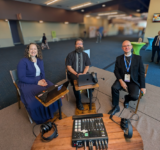
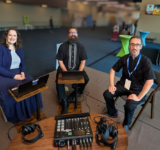
The Rev. Scot Kerns, pastor of Faith Lutheran Church in Easton, Pennsylvania, joins the Rev. Dr. Phil Booe to study 1 Chronicles 1:1–27.
To learn more about Faith in Easton, visit faithlcms.com.
When everything familiar has fallen apart, where do you begin again? For God’s people returning from exile, that question reaches into their homes, their worship, and even their very identity. First Chronicles answers with generations of names and a history that reminds a battered people whose they are. This study will explore Israel’s family tree, Saul’s tragic fall, David’s reign, and preparations for the temple. Why does worship stand at the center of Israel’s life? How can a holy God dwell among sinful people? And how does God fulfill His promise to establish David’s throne forever? Through familiar accounts and often-overlooked details, 1 Chronicles bears witness to God’s faithfulness despite His people’s failures and points to Jesus Christ, the Son of David, whose kingdom has no end and whose sacrifice brings sinners into God’s presence.
Thy Strong Word, hosted by Rev. Dr. Phil Booe, pastor of St. John Lutheran Church of Luverne, MN, reveals the light of our salvation in Christ through study of God’s Word, breaking our darkness with His redeeming light. Each weekday, two pastors fix our eyes on Jesus by considering Holy Scripture, verse by verse, in order to be strengthened in the Word and be equipped to faithfully serve in our daily vocations. Submit comments or questions to: thystrongword@kfuo.org.
Thy Strong Word is graciously underwritten by the Lutheran Heritage Foundation. Through the mission gifts of people like you, LHF translates, publishes, distributes and introduces books that are Bible-based, Christ-centered and Reformation-driven. Learn more at lhfmissions.org.
1 Chronicles 1:1-27
From Adam to Abraham
[1] Adam, Seth, Enosh; [2] Kenan, Mahalalel, Jared; [3] Enoch, Methuselah, Lamech; [4] Noah, Shem, Ham, and Japheth.
[5] The sons of Japheth: Gomer, Magog, Madai, Javan, Tubal, Meshech, and Tiras. [6] The sons of Gomer: Ashkenaz, Riphath, and Togarmah. [7] The sons of Javan: Elishah, Tarshish, Kittim, and Rodanim.
[8] The sons of Ham: Cush, Egypt, Put, and Canaan. [9] The sons of Cush: Seba, Havilah, Sabta, Raamah, and Sabteca. The sons of Raamah: Sheba and Dedan. [10] Cush fathered Nimrod. He was the first on earth to be a mighty man.
[11] Egypt fathered Ludim, Anamim, Lehabim, Naphtuhim, [12] Pathrusim, Casluhim (from whom the Philistines came), and Caphtorim.
[13] Canaan fathered Sidon his firstborn and Heth, [14] and the Jebusites, the Amorites, the Girgashites, [15] the Hivites, the Arkites, the Sinites, [16] the Arvadites, the Zemarites, and the Hamathites.
[17] The sons of Shem: Elam, Asshur, Arpachshad, Lud, and Aram. And the sons of Aram: Uz, Hul, Gether, and Meshech. [18] Arpachshad fathered Shelah, and Shelah fathered Eber. [19] To Eber were born two sons: the name of the one was Peleg (for in his days the earth was divided), and his brother’s name was Joktan. [20] Joktan fathered Almodad, Sheleph, Hazarmaveth, Jerah, [21] Hadoram, Uzal, Diklah, [22] Obal, Abimael, Sheba, [23] Ophir, Havilah, and Jobab; all these were the sons of Joktan.
[24] Shem, Arpachshad, Shelah; [25] Eber, Peleg, Reu; [26] Serug, Nahor, Terah; [27] Abram, that is, Abraham.
Scripture quotations are from the ESV® Bible (The Holy Bible, English Standard Version®), © 2001 by Crossway, a publishing ministry of Good News Publishers. ESV Text Edition: 2025. The ESV text may not be quoted in any publication made available to the public by a Creative Commons license. The ESV may not be translated in whole or in part into any other language. Used by permission. All rights reserved.